
Last month you made $4,200 freelancing, this month it’s looking more like $1,800, and your rent is still the same $1,500 regardless of what your bank account thinks about it. If you’ve been struggling to budget on irregular income, this complete guide will show you exactly how to smooth out those money roller coasters and actually sleep at night. You’ll learn the specific systems successful freelancers use to handle unpredictable paychecks, plus the exact budgeting method that works when you never know what next month will bring.
Disclaimer: This article is for informational purposes only and does not constitute financial advice.
Table of Contents
- 1 Why It’s So Hard to Budget on Irregular Income as a Freelancer
- 2 Why Traditional Budgets Fail for Variable Income Earners
- 3 The Zero-Based Budget Method for Freelancers
- 4 Step-by-Step Freelancer Budget Template and Calculator
- 5 What Percentage Should You Save on Irregular Income?
- 6 How Do You Handle Expenses When Income Fluctuates Monthly?
- 7 For UK Readers: Managing Freelance Finances with British Tools
- 8 For Canadian Readers: Budgeting with Canadian Financial Products
- 8.1 How much should I save when my income varies each month?
- 8.2 What’s the best budgeting method for freelancers?
- 8.3 How do I budget for taxes on irregular income?
- 8.4 Should I use different bank accounts for budgeting irregular income?
- 8.5 How do I handle large irregular payments in my budget?
- 8.6 What budgeting apps work best for variable income?
Why It’s So Hard to Budget on Irregular Income as a Freelancer
Your income last month was $4,200, but this month you’re staring at $1,800 — and next month? Who knows. Welcome to freelancer life, where your bank account rides a roller coaster you never bought tickets for.
Here’s the thing about freelancer budgeting: everything you’ve learned about personal finance assumes you get the same paycheck every two weeks. But according to the Bureau of Labor Statistics, over 16 million Americans work as independent contractors, and most of us are winging it financially.
Traditional budgets simply don’t work when your income swings wildly from month to month.
You can’t just divide your monthly expenses by your average income and call it a day, because averages don’t pay your rent when you have a slow month. Consider this scenario: you earned $6,000 in January, $2,500 in February, and $4,800 in March — that’s a monthly average of $4,433, but good luck explaining “averages” to your landlord when February’s rent is due. When you budget on irregular income, you need a system that works with feast-or-famine reality, not against it. The traditional advice of “spend less than you earn” becomes almost laughably unhelpful when your earnings change dramatically month to month (though the advice isn’t wrong, it’s just incomplete). What you really need is to think like a business owner who manages cash flow, not an employee who budgets a steady salary.
Your irregular income isn’t a bug in your financial system — it’s a feature that requires a completely different approach to money management.

Why Traditional Budgets Fail for Variable Income Earners
A striking 73% of Americans have tried the traditional “pay yourself first” budgeting method, but according to a Federal Reserve study, only 36% of gig workers can actually stick to a fixed monthly budget for more than three months.
The problem isn’t your willpower or your math skills. You’re trying to squeeze your unpredictable freelance income into a system designed for people who get the exact same paycheck every two weeks. That’s like trying to wear a suit tailored for someone else — it’s never going to fit right, no matter how much you adjust it.
Traditional budgets assume you know exactly what’s coming in each month, but your reality looks completely different. One month you might land a $4,500 project, the next month you’re scrambling to hit $1,800. The Consumer Financial Protection Bureau recognizes this challenge and offers specific guidance for variable income earners, but most budgeting advice still pretends everyone has predictable paychecks.
The Fixed Budget Trap
Most budgeting apps and guides on how to stop living paycheck to paycheck assume you can allocate specific dollar amounts to categories each month. Rent: $1,200. Groceries: $400. Savings: $500. Done.
But what happens when your income drops to $2,100 one month? Suddenly your beautiful variable income budget becomes a stress-inducing reminder of how short you’re falling (literally impossible to save $500 when you’re already $100 in the red). You end up feeling like you’re failing at money management when really, you just need a system that bends with your income instead of breaking against it.
The Zero-Based Budget Method for Freelancers
Forget everything you know about budgeting — because when your income swings from $1,200 to $4,800 month to month, your old percentage-based approach is basically useless. According to the Federal Reserve’s Survey of Household Economics, 36% of gig workers reported income that varies by more than 25% month to month, making traditional methods feel like trying to hit a moving target while blindfolded.
This is where the zero-based budget becomes your best friend when you budget on irregular income. Instead of allocating percentages, you give every single dollar a job before you spend it. No money sits around wondering what it’s supposed to do.
Say you just invoiced $3,400 for November. Rather than simply paying bills and hoping for the best, assign every dollar: $1,200 for rent, $300 for groceries, $400 for taxes, $500 for your emergency fund, and so on until you hit zero. The goal isn’t to spend everything (that would be financial suicide), but to be intentional about where your money goes — whether that’s expenses, savings, or investments starting with as little as $100.
Setting Up Your Zero-Based System
Start with your absolute survival number — what you need to keep the lights on and food on the table. Mine was $2,100 when I started freelancing (yours will be different, and that’s perfectly fine). Then list every possible expense and savings goal you have.
When money comes in, assign it in this order: survival expenses first, taxes second, emergency fund third, then everything else. Use a simple spreadsheet or apps like YNAB that are built for this method. The beauty is that whether you earn $2,000 or $6,000 this month, you know exactly where every dollar is going before you’re tempted to spend it on that new camera lens you’ve been eyeing.
Step-by-Step Freelancer Budget Template and Calculator
Most budgeting apps crash and burn when your income swings from $2,000 one month to $6,500 the next. You need a system that rolls with those punches instead of making you feel like a financial failure every time your earnings zigzag.
According to the Federal Reserve’s 2023 Report on the Economic Well-Being of U.S. Households, 36% of gig workers experienced significant month-to-month income variation, making traditional percentage-based budgets nearly impossible to follow. That’s exactly why learning to budget on irregular income requires a different framework entirely.
Your foundation starts with flipping the script on how you think about money allocation. Instead of asking “What percentage should I save?” the better question is “What’s the minimum I need to survive, and how much buffer can I create above that?”
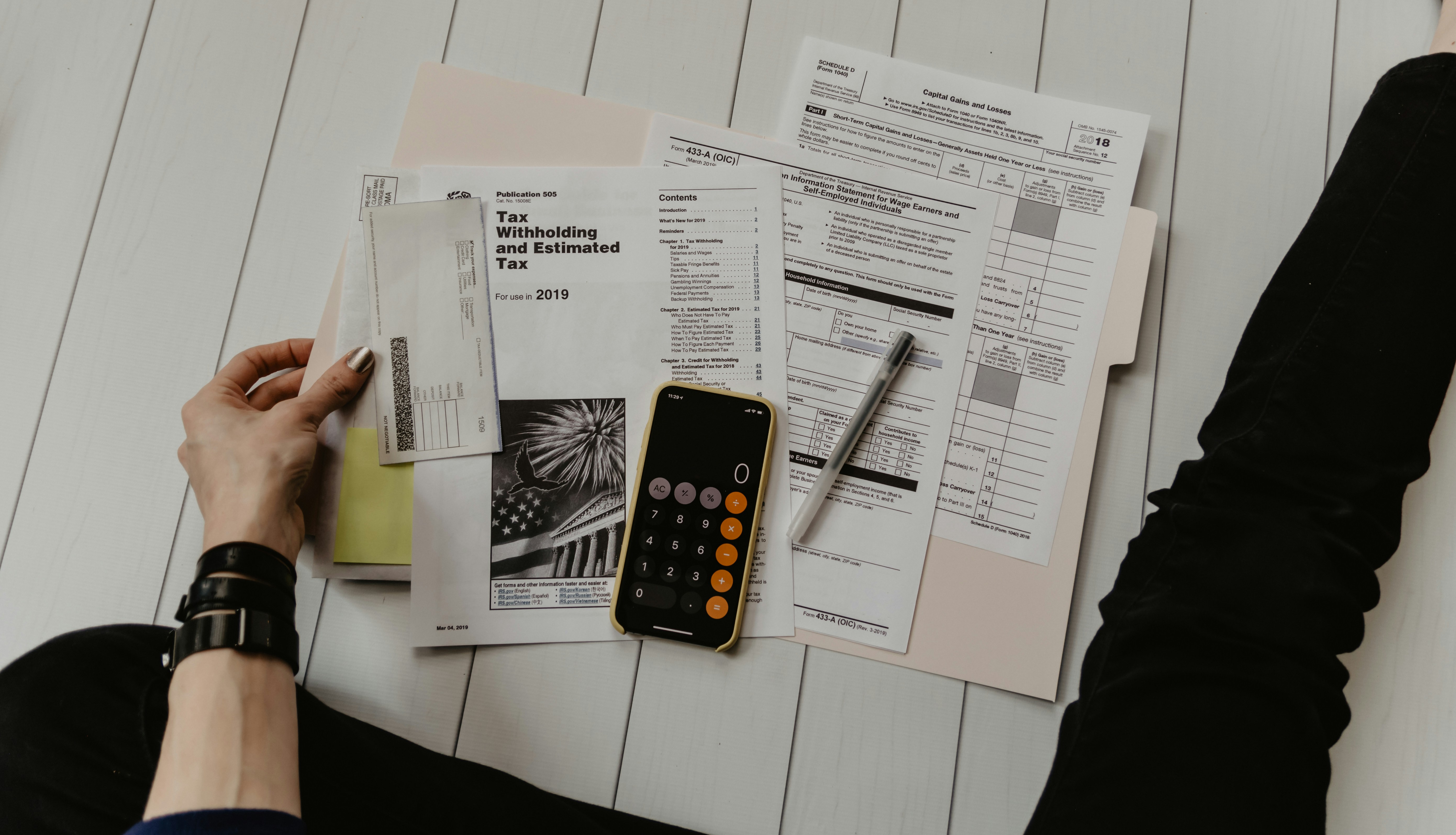
Monthly Minimum Budget Framework
Start by calculating your bare-bones survival number — rent, utilities, groceries, minimum debt payments, and basic transportation. Let’s say that’s $3,200 monthly. This becomes your “red line” amount that you absolutely must earn and set aside first, no matter what.
Next, add a 20% buffer for surprise expenses and irregular bills (because your car registration always expires during your slowest month). That brings your target to $3,840. When you earn above this amount, every extra dollar gets divided: 50% to your emergency fund until you hit six months of expenses, 30% to taxes, and 20% to your “opportunity fund” for equipment, courses, or taking time off between projects.
This approach means you’re not scrambling to find grocery money when client payments run late — you’ve already secured your basics and can focus on growing your freelance business.
What Percentage Should You Save on Irregular Income?
Nobody tells you this upfront: that classic “20% rule” was made for people with steady paychecks, not your unpredictable freelance life.
When you budget on irregular income, rigid saving rules can actually backfire. According to the Federal Reserve’s Survey of Household Economics, 36% of gig workers couldn’t cover a $400 emergency expense — and inflexible saving rules are partly to blame.
Instead of focusing on percentages, think in reverse. Calculate your absolute minimum monthly expenses first, then save everything above that during your good months. Say you need $3,000 to cover rent, groceries, and bills, but you earned $5,500 this month — that’s $2,500 you could potentially save. Next month you might only bring in $2,200, so you’ll dip into your savings to make up the $800 difference.
Your goal isn’t hitting 20% every single month (that’s impossible when your income swings from $1,800 to $6,000). What truly matters is building a buffer that smooths out those peaks and valleys so you can sleep at night without checking your bank balance. Aim for saving 30-50% during your high-earning months and 0% during lean periods. This aggressive approach during good times helps you build that crucial emergency fund faster than traditional advice suggests.
Start by saving one month of expenses, then three months, then six. The exact percentage matters less than consistency and building that financial cushion that’ll keep you afloat when clients disappear or projects get delayed (and they will). If you’re looking for ways to boost your income during slow months, explore these side hustles that actually pay $1,000 per month.
For more specific money-saving strategies, focus on automating transfers during your peak earning weeks.
How Do You Handle Expenses When Income Fluctuates Monthly?
Your rent doesn’t care that you only made $800 this month instead of your usual $3,500. Neither does your phone bill, your car payment, or your grocery store. Yet here you are, trying to squeeze irregular earnings into a world built for steady paychecks.
According to the Federal Reserve’s Economic Well-Being report, 36% of gig workers struggle to cover a $400 emergency expense compared to 24% of traditional employees. The math gets brutal when your income swings wildly month to month.
The key mindset shift: you can’t budget on irregular income the same way your 9-to-5 friends do. Instead, think in quarterly chunks rather than monthly snapshots. Look at your last six months of earnings and find your average monthly income — that’s your baseline for planning expenses.
Say you earned $2,100, $4,200, $1,800, $3,600, $2,400, and $3,900 over six months. Your average? $3,000 per month. Build your essential expenses around 80% of that number ($2,400), because some months will inevitably fall short, and when they do, you’ll need that buffer to avoid panic-spending on credit cards or skipping bills entirely.
Separate your expenses into three buckets: survival costs (rent, utilities, minimum loan payments), stability costs (groceries, gas, phone), and growth costs (everything else). Survival costs get paid first, always.
When you have a great month — and you will — resist the urge to upgrade your lifestyle immediately (too many freelancers lease expensive cars after one good quarter, only to regret it later).
For UK Readers: Managing Freelance Finances with British Tools
Your irregular income doesn’t have to mean irregular stress levels — especially when you’ve got some brilliant UK-specific tools at your disposal. According to IPSE’s 2023 Freelancer Confidence Index, 67% of UK freelancers worry about financial planning, but you don’t have to be part of that statistic.
Start with HMRC’s Self Assessment tools to track your quarterly tax obligations. Don’t wait until January!
Use Starling Bank’s business account (it’s free and gives you spending insights) or Monzo’s budgeting features to separate your business and personal expenses automatically. Set up different pots for taxes, VAT, and your emergency fund.
Let’s say you earned £2,800 in March but only £1,200 in April — a scenario that’ll make your heart race if you’re not prepared. With proper planning, you’d have already moved 30% of March’s income (£840) into your tax pot and another 20% (£560) into your irregular income buffer, leaving you £1,400 for expenses that month.
Consider opening a Help to Save account if you’re eligible — the government will literally match 50p for every pound you save over four years (up to £1,200 in bonuses). Your future self will thank you when work gets slow.
The key is treating your fluctuating income like a predictable salary by averaging your last six months of earnings and budgeting from that baseline number, then treating anything above as a bonus for debt repayment or savings.
For Canadian Readers: Budgeting with Canadian Financial Products
Your TFSA is about to become your best friend when you’re dealing with unpredictable income. Unlike your American freelancer friends who stress about tax-advantaged accounts, you’ve got some seriously flexible options that work perfectly for irregular earners.
According to Statistics Canada, 15% of Canadian workers are self-employed, and most of them aren’t maximizing their TFSAs for emergency funds. That’s a missed opportunity. Your variable income budget should revolve around this account because you can pull money out anytime without penalties, and you get that contribution room back the following year.
Say you’re a graphic designer earning anywhere from $2,500 to $6,000 monthly. Stash your emergency fund in a high-interest TFSA (currently earning around 4-5% with providers like Tangerine or EQ Bank). When you have a $6,000 month, dump the extra into your TFSA. Need it during a lean $2,500 month? Pull it out guilt-free.
Your RRSP works differently though. Don’t touch it for short-term income smoothing — you’ll get hit with withholding tax and lose that contribution room forever. Save RRSP contributions for those boom months when you need the immediate tax deduction.
For day-to-day banking, consider a no-fee account like Tangerine or Simplii (because who wants to pay $15 monthly when your income already fluctuates?). Set up automatic transfers to move money between your chequing, TFSA, and a separate tax account for those quarterly HST payments.
Frequently Asked Questions About Irregular Income Budgeting
Let’s tackle the questions that keep you up at 2 AM when your bank balance is doing its monthly roller coaster impression.
How much should I save when my income varies each month?
Aim for 3-6 months of expenses if you’re starting out, but honestly, work toward 6-12 months when your income swings wildly. According to the Federal Reserve, 32% of gig workers couldn’t cover a $400 emergency expense. Start with whatever you can — even $25 per good month adds up. Your future self will thank you when that client pays 60 days late.
What’s the best budgeting method for freelancers?
The “pay yourself first” method works beautifully here. Set aside money for taxes, savings, and fixed expenses the moment any payment hits your account (before you convince yourself you “need” those new headphones). Zero-based budgeting also works well because you’re giving every dollar a job. Don’t overthink it.
How do I budget for taxes on irregular income?
Save 25-30% of every payment for taxes immediately — no exceptions. Open a separate “tax jail” account where this money lives until quarterly payments are due. Say you invoice $4,000 this month: $1,000 goes straight to tax jail, and you budget with the remaining $3,000.
Should I use different bank accounts for budgeting irregular income?
Absolutely! You’ll want at least three accounts: checking for daily expenses, savings for emergencies, and that tax account mentioned above. Some freelancers use five or six accounts to separate business expenses, estimated taxes, and different savings goals.
How do I handle large irregular payments in my budget?
Don’t spend it all in the month you receive it — that’s the fastest way to go broke between big projects. Divide large payments across the months until your next expected big payday. If you get $6,000 in January but won’t see another payment until April, budget $2,000 per month for three months.
What budgeting apps work best for variable income?
YNAB (You Need A Budget) handles irregular income beautifully because it focuses on the money you actually have, not projected income. Mint works too, but you’ll need to manually adjust your monthly income projections frequently.
Bottom Line
Learning to budget on irregular income isn’t rocket science — it just requires a different approach than the typical “spend 30% on housing” advice. Build your safety net first with three months of bare-bones expenses saved up. Use the feast-and-famine method: live off your lowest monthly income and save everything extra during good months. Track your income patterns for six months so you can spot trends and plan better.
Your move: Calculate your absolute minimum monthly expenses this week — rent, groceries, utilities, debt payments. That’s your baseline survival number.
Found this helpful? Share it with someone who needs to hear it.