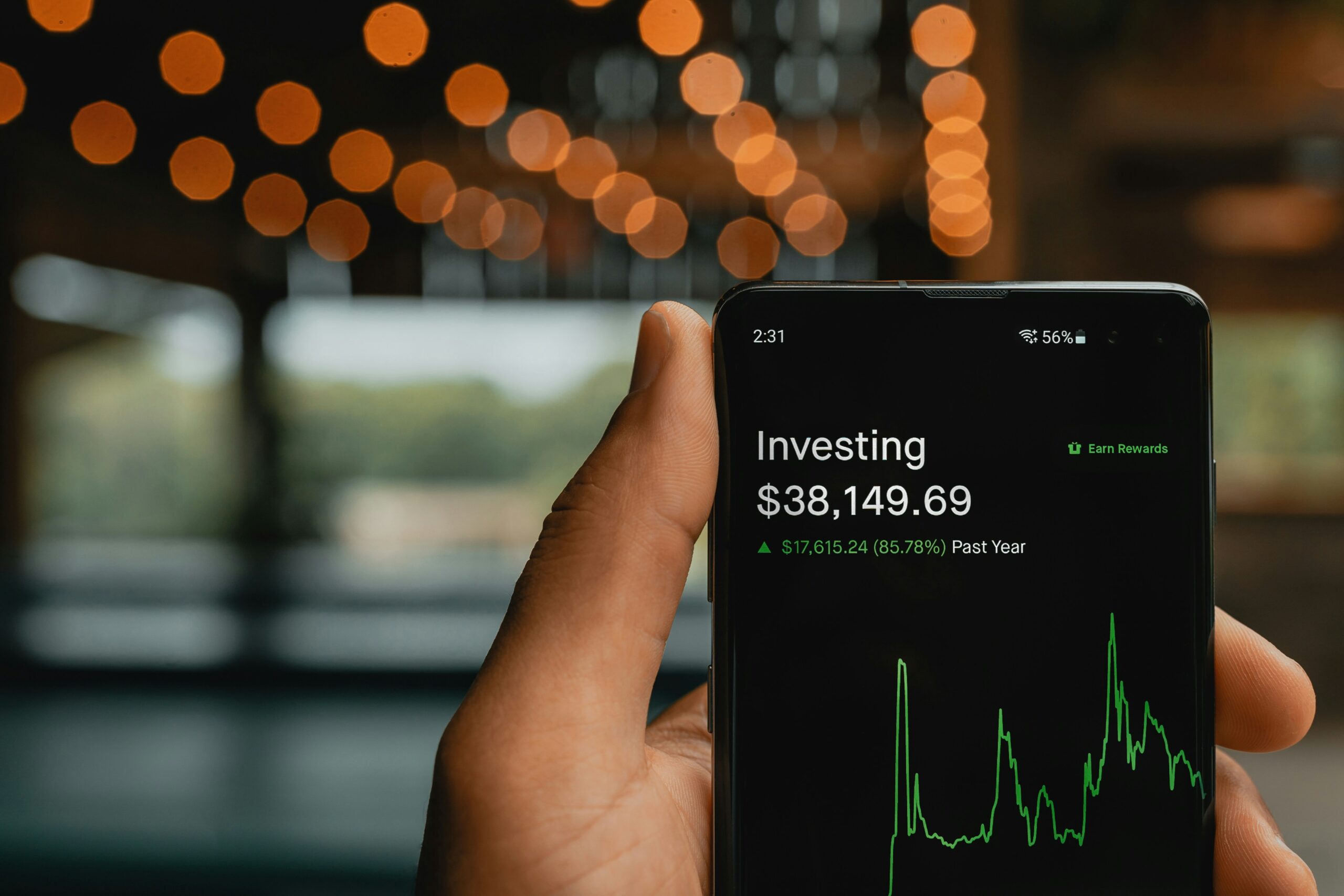
You’ve got $100 sitting in your checking account and everyone keeps saying you should “start investing,” but every piece of advice assumes you’ve got thousands to throw around. Here’s the truth: you can absolutely learn how to start investing with $100 — learning how to start investing is easier than ever or less, and you don’t need to understand complicated charts or have a finance degree to make it work. By the end of this guide, you’ll know exactly where to put that $100, which apps won’t charge you fees that eat up your tiny balance, and how to turn your coffee money into actual wealth over time.
Disclaimer: This article is for informational purposes only and does not constitute financial advice.
Table of Contents
- 1 How to Start Investing With $100 or Less: The Basics
- 2 Why Investing Small Amounts Actually Works
- 3 Best Micro Investing Apps for Small Budgets
- 4 Index Funds for Beginners: Your First Investment Choice
- 5 Step-by-Step Plan: Your First $100 Investment
- 6 What Investment Options Are Available With $100?
- 7 For UK Readers: Starting Your Investment Journey
- 8 For Canadian Readers: Investment Options and Accounts
- 9 Common Mistakes to Avoid When Starting Small
How to Start Investing With $100 or Less: The Basics
Here’s what nobody tells you: you don’t need thousands of dollars to start investing. You just need to stop waiting for the “perfect” moment.
According to a Federal Reserve study, 36% of Americans can’t cover a $400 emergency expense, yet many of these same people think they need $1,000 or more to begin investing. That’s backwards thinking that keeps you broke.
Let’s get real about how to start investing with $100 or less. First, you’ll want to understand what you’re getting into before you put any money at risk — the SEC has a helpful guide on things to consider before investing that’s worth reading.
Your reality check: Say you have $100 sitting in your checking account after paying bills. You could let it earn basically nothing (most savings accounts pay under 0.5%), or you could put it to work in the stock market where the average annual return has been about 10% over the long term.
The key to beginner investing with small amounts is finding brokers with zero minimum deposits and no trading fees. Fidelity, Charles Schwab, and Vanguard all offer this. You can literally buy fractional shares of expensive stocks like Apple or Amazon with your $100.
Don’t overthink it. Your biggest enemy isn’t picking the wrong stock — it’s never starting at all because you think $100 isn’t “enough.” Time in the market beats timing the market, and waiting for more money just costs you years of potential growth.
Why Investing Small Amounts Actually Works
Something that’ll blow your mind: you don’t need to be rich to start building wealth. I know it sounds backwards, but investing small amounts consistently can actually beat waiting until you have thousands sitting around. According to a Bankrate study, 61% of Americans don’t invest because they think they need more money to start — but they’re missing out on years of potential growth.
Look, I get it. You see those finance bros talking about dropping $10,000 into the market, and your $100 feels laughable. But here’s the thing: investing small amounts teaches you the ropes without risking your rent money, and time in the market beats timing the market every single time.
Say you invest $100 monthly starting at age 25 versus waiting until 35 to invest $200 monthly. Even though the later starter contributes more each month, the early bird ends up with significantly more money at retirement because of those extra ten years of compound growth. That’s math working in your favor.
How to Stop Living Paycheck to Paycheck: Complete Guide
The Power of Compound Interest
Compound interest is basically earning money on your money, then earning money on that money too. Think of it like a snowball rolling downhill — it starts small but picks up speed and size as it goes. Your $100 investment might earn $7 in the first year (assuming a 7% return), but in year two, you’re earning returns on $107, not just your original $100.
Dollar-Cost Averaging Benefits
When you invest small amounts regularly, you’re accidentally using a strategy called dollar-cost averaging (fancy name, simple concept). You buy more shares when prices are low and fewer when they’re high, which smooths out market volatility over time. Instead of trying to time the perfect moment to invest your big lump sum — which even professionals can’t do consistently — you’re spreading your risk across multiple purchase dates. This takes the guesswork out of investing and protects you from making emotional decisions when the market gets crazy. After 30 years, that single $100 investment could be worth over $760 without you adding another penny. The earlier you start, the more time this mathematical magic has to work, which is why even small amounts can grow into serious money over decades.
Best Micro Investing Apps for Small Budgets
Wild fact: you can literally own a piece of Amazon for less than $5.
The game completely changed when micro investing apps started letting regular people invest pocket change instead of requiring thousands upfront. According to a 2023 NerdWallet survey, 43% of young investors say they’d invest more if minimum amounts were lower — and these platforms solve exactly that problem.
Say you’ve got $100 to start and can squeeze out $25 weekly from your coffee budget. Instead of needing $3,500 to buy one share of Google, fractional shares let you own $25 worth and build from there. That’s the magic here.
Top 5 Micro Investing Platforms Compared
Acorns rounds up your purchases and invests the spare change — perfect if you’re forgetful about investing. Stash lets you start with $5 and pick from themed portfolios like “Clean & Green.” Robinhood offers commission-free trades with zero minimums (though their customer service can be rough). M1 Finance gives you more control with “pie” portfolios that automatically rebalance. For hands-off investing, robo-advisors like those highlighted in NerdWallet’s robo-advisor comparison handle everything for you, though most require $500+ minimums.
The real winner depends on your style: Want automation? Go Acorns. Prefer control? Choose M1. Just want simple? Stash works great.
Remember, the best app is the one you’ll actually use consistently, not the one with the fanciest features you’ll never touch.
Index Funds for Beginners: Your First Investment Choice
Another wild fact: you can literally own a piece of 500 companies with your $100 starter fund. That’s the magic of index funds, and they’re about to become your new best friend.
Think of an index fund as a giant basket that holds hundreds or thousands of stocks automatically. Instead of picking individual companies (which is basically gambling when you’re starting out), you’re buying a tiny slice of everything. According to the Investment Company Institute, the average expense ratio for equity index funds was just 0.06% in 2022 — meaning you’ll pay only $6 per year for every $10,000 invested.
Here’s how it works in practice: say you invest your $100 in an S&P 500 index fund like FZROX or VTI . You instantly own microscopic pieces of Apple, Microsoft, Amazon, and 497 other companies. No research required. No stock-picking stress.
The beauty is simplicity. You don’t need to worry about whether Tesla’s having a bad quarter or if that biotech company you’ve never heard of is about to tank (because honestly, you probably shouldn’t be betting on individual stocks anyway when you’re just getting started with investing).
Index funds for beginners work because they’re diversified, cheap, and historically reliable. The S&P 500 has averaged about 10% annual returns over the past 90 years. Will you get exactly 10% every year? Absolutely not. But over time, you’re betting on the entire economy’s growth rather than trying to pick winners.
Understanding how to start investing means knowing your $100 won’t make you rich overnight, but it’ll start building the habit that actually will.

Step-by-Step Plan: Your First $100 Investment
What surprises most people: you don’t need to understand the stock market to start investing in it. You just need $100 and about 20 minutes to set up your account.
According to the Federal Reserve’s 2022 Survey of Consumer Finances, 58% of American families own stocks, but the majority started with less than $500. That means you’re already ahead of the curve by taking action with your first hundred dollars.
Pre-Investment Checklist
Before you invest a single dollar, make sure you’ve covered these basics. First, you need at least $500 in emergency savings (this isn’t your investment money). Second, pay off any credit card debt that’s charging you more than 15% interest — you won’t beat those rates in the stock market consistently. Third, if your employer offers a 401(k) match, contribute enough to get the full match first. It’s free money.
Finally, make sure this $100 won’t be needed for rent, groceries, or bills in the next five years. Think of it as money you’re willing to see disappear tomorrow (though it probably won’t).
Once you’ve checked those boxes, here’s your plan. Download a beginner-friendly app like Fidelity, Schwab, or Vanguard on your phone. Create an account with your Social Security number and bank details. Choose a target-date fund or broad market index fund — these automatically spread your money across hundreds of companies, so you don’t have to pick individual stocks.
Say you’re 28 years old and earn $4,200 per month: you’d pick a 2065 target-date fund that automatically adjusts as you get closer to retirement. Invest your $100, then set up automatic monthly contributions of whatever you can afford — even $25 monthly adds up over time. Done.
What Investment Options Are Available With $100?
Something that would’ve blown my mind ten years ago: you can literally buy a piece of Amazon stock for $20 instead of paying the full $3,000+ share price.
That’s the magic of fractional shares, and it’s completely changed the game for investing small amounts. According to a 2023 Charles Schwab study, 41% of new investors now use fractional shares as their primary way to build portfolios with limited cash.
Your $100 can go into several places. First up: index funds through apps like Fidelity or Vanguard, where you can buy into funds tracking the S&P 500 with zero minimum investments. Second: individual stocks through brokers like Schwab, Fidelity, or E*TRADE that offer fractional shares with no trading fees.
Say you’ve got your $100 and want to split it up: you could put $60 into a broad market index fund, $25 into a fractional share of Microsoft, and $15 into a tech-focused ETF. Easy math, instant diversification.
You’ve also got robo-advisors like Betterment or Wealthfront that’ll automatically invest your money across different assets for about 0.25% annually (that’s just 25 cents on your $100). These platforms handle all the boring stuff like rebalancing and tax-loss harvesting while you focus on adding more money each month.
Target-date funds are another solid option if you want something completely hands-off that automatically adjusts as you get closer to retirement.
For UK Readers: Starting Your Investment Journey
Your £100 can actually work harder than most people’s £1,000 if you know where to put it. Thing is, beginner investing in the UK gives you some serious advantages that Americans don’t have.
First up: your Stocks & Shares ISA. This is your secret weapon. You can invest up to £20,000 per year completely tax-free (according to HMRC’s 2024 allowances), and any gains or dividends you earn won’t get taxed either. That’s huge.
Start simple. Really simple.
Say you’ve got your £100 ready to invest — open a Stocks & Shares ISA with a platform like Vanguard, Hargreaves Lansdown, or AJ Bell. Look for a global index fund like Vanguard’s FTSE Global All Cap Index Fund. The annual fee? Just 0.23%. Your initial investment covers the minimum, and you can add as little as £25 monthly.
What I love about this approach: you’re buying tiny pieces of thousands of companies worldwide, from Apple to ASML to companies you’ve never heard of but that make serious money. One purchase gives you instant diversification across markets, industries, and currencies without needing to research individual stocks or worry about picking winners and losers.
The best part? You can set up a direct debit for £25-50 monthly and basically forget about it. Your money grows while you sleep, work, or binge-watch Netflix (we don’t judge). Understanding compound growth will show you exactly how powerful this simple strategy becomes over time.
For Canadian Readers: Investment Options and Accounts
What nobody tells you about investing in Canada: you’ve got some of the best tax-sheltered accounts in the world, but most people don’t use them properly.
Your TFSA should be your best friend when you’re investing small amounts. Every dollar you make inside this account? Tax-free forever. You can contribute $6,500 in 2023 (plus any unused room from previous years), and according to the Canada Revenue Agency, the average Canadian has over $35,000 in unused TFSA contribution room just sitting there.
Start simple. Open a TFSA at a discount broker like Questrade or Wealthsimple Trade, where you can buy ETFs commission-free. Your $100 can go straight into something like XGRO (a one-fund portfolio that holds everything) or TDB902 if you’re with TD Direct Investing.
Say you’re 25 and contribute just $100 monthly to your TFSA in a broad market ETF averaging 7% annually – you’d have roughly $175,000 by age 55, and you won’t owe the government a penny in taxes on those gains.
Skip the RRSP for now. I know everyone talks about it, but when you’re starting with smaller amounts and likely in a lower tax bracket, the TFSA wins every time. You’ll thank yourself later when you’re pulling money out tax-free instead of getting hit with income tax on RRSP withdrawals.
Don’t overthink it. Pick one account, one ETF, and start.
Need extra cash to invest? Check out our guide on side hustles that actually pay $1000+ monthly to fund your investment account faster.
Common Mistakes to Avoid When Starting Small
Brutal truth: most people mess up their first $100 investment before they even click “buy.”
I’ve watched countless friends make the same beginner investing mistakes, and honestly, it’s painful to see. According to a Dalbar study, the average investor earns just 3.7% annually over 20 years because they keep shooting themselves in the foot with these exact errors.
The biggest mistake? Trying to get rich quick with penny stocks or crypto. Don’t do this. Say you’ve got your $100 ready to invest — you see some $0.50 stock that promises to “moon” and throw everything at it. Three weeks later, you’re down to $23 and swearing off investing forever.
Another classic: putting all your money in one company because you love their products (looking at you, Apple fanboys). Your $100 becomes $100 worth of risk in a single stock instead of spreading it across dozens of companies through an index fund.
Then there’s the timing trap. You’ll wait for the “perfect” moment to invest, checking market news daily, convinced you can predict when stocks will drop. Meanwhile, your $100 sits earning 0.01% in savings while the market climbs 10% that year.
Finally, don’t panic-sell the moment you see red numbers. Markets go up and down — that’s literally how they work (shocking, I know).
Frequently Asked Questions About $100 Investing
Let me guess — you’re sitting there wondering if your measly $100 can actually do anything in the investing world, or if you need to wait until you’ve got thousands saved up like some finance guru.
Can I really start investing with just $100?
Absolutely you can! Most major brokerages like Fidelity, Schwab, and Vanguard have zero minimum investment requirements now, and you can buy fractional shares of expensive stocks with whatever you’ve got. According to a 2023 Bankrate study, 61% of Americans think they need at least $1,000 to start investing, but that’s just not true anymore. You could literally start with $1 if you wanted to (though $100 gives you more options).
What’s the best investment for a complete beginner?
Go with a broad market index fund like VTI or an S&P 500 fund. These funds own hundreds or thousands of companies, so you’re not putting all your eggs in one basket, and they’re dead simple to understand. Think of it like buying a tiny slice of the entire stock market instead of trying to pick individual winners and losers.
How much should I expect to earn from $100?
Realistic math: if the stock market gives you its historical average return of about 10% per year, your $100 would grow to roughly $110 after one year (though it’ll bounce around a lot). After 10 years without adding anything else, you’d have around $260. Not life-changing money, but it’s a start.
Are there any fees I should worry about?
Most brokerages don’t charge trading fees anymore, but watch out for expense ratios on funds — that’s the annual fee they charge to manage your money. Stick with low-cost index funds that charge 0.20% or less per year, which means you’d pay just 20 cents annually on your $100 investment.
Should I invest $100 all at once or gradually?
Just invest it all at once. With only $100, you’re not going to make or break your financial future based on timing, and you’ll save yourself the mental energy of trying to time the market perfectly. The sooner your money gets to work, the sooner it can start growing.
What if I lose my $100 investment?
Look, your investment will definitely go down sometimes — that’s just how investing works, and anyone who tells you otherwise is lying to you. But if you invest in a diversified index fund and leave it alone for years, history suggests you’ll come out ahead (the S&P 500 has never lost money over any 20-year period). Only invest money you won’t need for at least five years, so you can ride out the bumps.
If you still have high-interest debt, read our debt snowball vs debt avalanche guide first — paying off expensive debt is often the best “investment” you can make.
Bottom Line
Learning how to start investing with $100 or less isn’t about getting rich quick — it’s about building the habit and learning the ropes. You can open a brokerage account today with zero minimums, buy fractional shares of solid companies or ETFs, and start growing your money immediately. The biggest mistake? Waiting until you have “enough” money, because there’s never a perfect amount.
Your move: Pick one broker from this guide and open your account this week. Even if you only invest $25 to start, you’ll be ahead of everyone still thinking about it.
Found this helpful? Share it with someone who needs to hear it.